Roasting Beef Tenderloin
Roasting Beef Tenderloin
Flavor: 3 Out Of 5
Alternative Names: Whole Filet, Filet Mignon, Chateaubriand
 Beef Tenderloin Roast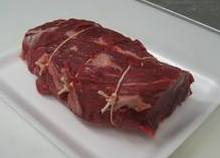
The tenderloin is a long cylindrical muscle cut from the middle of the cow right out of the short loin section. The muscle tissue does almost no work, so the tenderloin is the most tender piece of beef you can buy and because of this the most expensive.
Sold whole or as a smaller center cut roast, it has a pleasantly mild almost non-beefy flavor. Well recognized, beef tenderloin recipes are a favorite for entertaining.
Click Here - How To Grill Beef Tenderloin
Cooking Instructions
Roasting Beef Tenderloin
(Oven)
1. Remove the tenderloin roast from the refrigerator 1 hour before cooking to bring the meat to room temperature.
2. Trim and peel as much fat and skin as you can from the tenderloin if your butcher has not already done so. If you are cooking a whole tenderloin you will notice how it tapers down to a smaller thinner end (photo).
3. In order to have the roast cook more evenly tuck about 5-6 inches of the small end under the rest of the tenderloin (photo) and at 1-2 inch intervals tie the roast with kitchen string or butchers twine.
4. We recommend cooking all beef roast at lower temperatures except for tenderloin roast. Most of the premium roast such as prime rib and strip loin, a lower temperature of 250 degrees works best.
However we have found along with many other cooking experts that cooking beef tenderloin at a higher temperature of 425 degrees from start to finish had the same look and taste as the lower temperatures. So since there was no difference, you can cook a whole beef tenderloin roast in almost half the time.
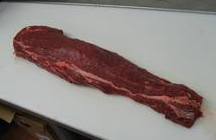 Whole Beef Tenderloin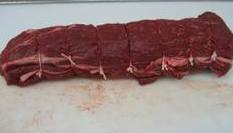
The top photo is a whole beef tenderloin. In the bottom photo the small end is folded under the roast and tied with twine at 1-2 inch intervals to give the roast a more uniform shape to help cook the tenderloin more evenly.
  INSTANT-READ
THERMOMETER
#1 Best Seller
INSTANT-READ
THERMOMETER
#1 Best Seller
|
Below is a cooking chart for roasting beef tenderloin. You should always use an instant-read thermometer to check the doneness of a roast.
| Doneness | Description | Meat Thermometer Reading |
| Rare | Red with cold, soft center | 125-130 degrees |
| Medium-Rare | Red with warm, somewhat firm center | 135-140 degrees |
| Medium | Pink and firm throughout | 140-150 degrees |
| Medium-well | Pink line in center, quite firm | 150-155 degrees |
| Well-done | Gray-brown throughout and completely firm | 160-165 degrees |
Return To Top - Roasting Beef Tenderloin


US To Metric System Chart
Oven Temperatures
Fahrenheit (°F) Celsius (°C)
125° 52°
150° 66°
175° 80°
200° 93°
225° 107°
250° 121°
275° 135°
300° 149°
325° 163°
350° 177°
375° 190°
400° 205°
425° 218°
450° 232°
475° 246°
500° 260°
TheMeatSource.com is a participant in the Amazon Services LLC Associates Program, an affiliate advertising program designed to provide a means for sites to earn advertising fees by advertising and linking to amazon.com


